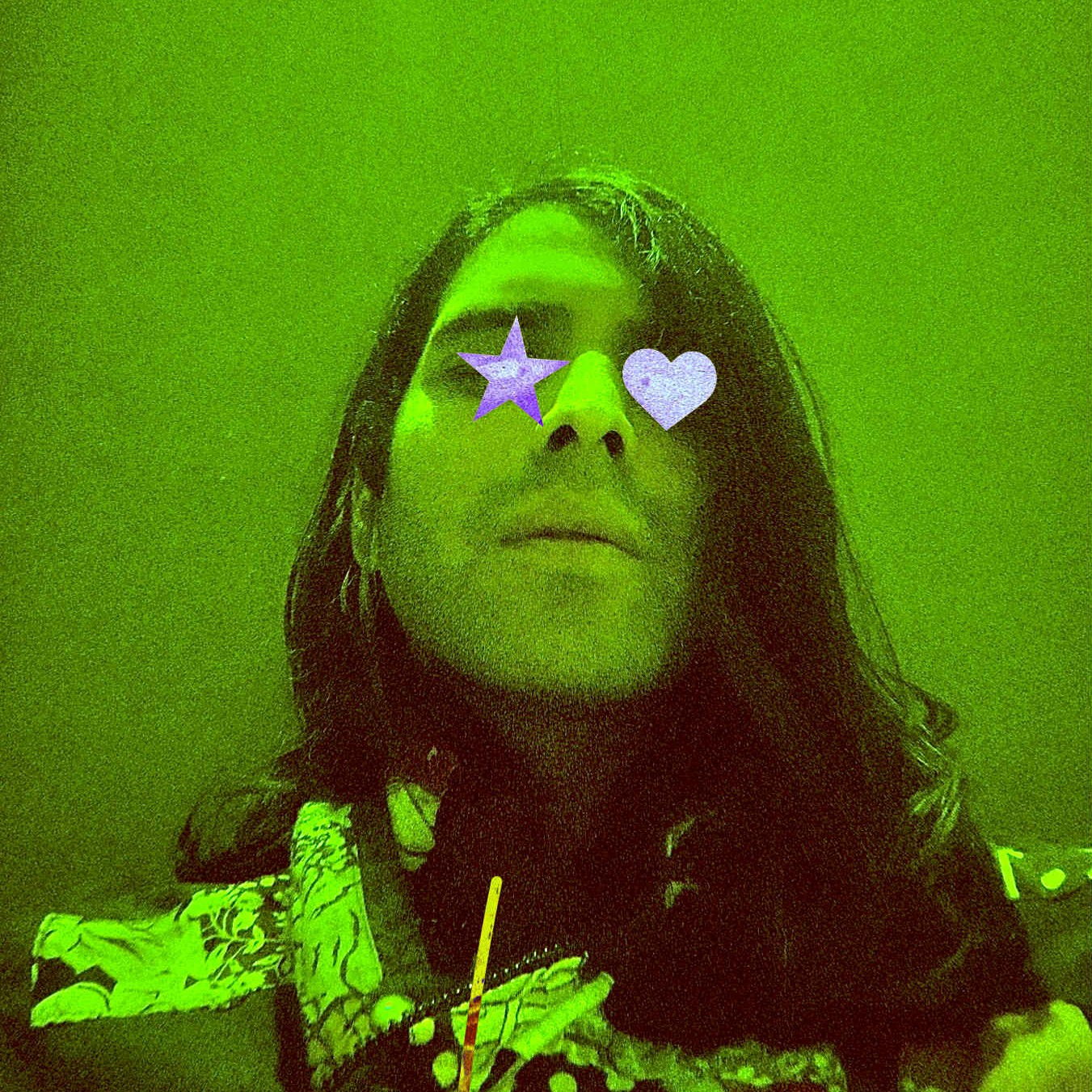
TIGERLAND is the dance punk project of Armaan Tagore, an outspoken anti-capitalist whose work often calls for working class solidarity against exploitation and man-made suffering. His work also considers how technology has the will either realize this vision, or lead to our demise. He is a multi-instrumentalist, visual artist and programmer from Queens, New York.
Heavily inspired by the diversity and collectivism of community building that New York City is famous for, Armaan was involved in community spaces and groups that advocated for rights and protections of vulnerable groups.
Music
The music I make is very inspired by the roughness and rawness of DIY. I want people to know that a person is behind the song they’re listening to – that it was slapped together on a laptop with a handful of instruments, audio samples, and microphone in a small apartment with no sound proofing. When we’re so used to things having a “professional” aesthetic, it’s refreshing and human not to care about polish or structure.
I’m obsessed with the emotion we feel when we love the moment; when we know we’re experiencing something we’ll remember forever, but also know that it’ll be a distant memory. That sort of, dance and cry as you behold the beauty and ephemerality of life.
Roots
The first time I learned about community as a concept was actually though a video game called LittleBigPlanet, which encouraged players to share and create in a very DIY, collectivist sort of way. It was also my first exposure to eclectic design, computer science, and music composition with digital tools. It was a very impressive little game.
In high school, I was the layout editor of the literary magazine called The Phoenix. It was an amazing community space that allowed us to understand how discourse was controlled by those in power – whether it was school administrators, media executives, or the president. We would host poetry readings and Bob Ross paint nights, collaborate with local printing presses to create zines, and take kids to parks and museums to help foster a love and appreciation for community, and inspire hope that organization could lead to change.
We used art and media as a way to be vulnerable with each other, and seek support and solidarity on issues that are difficult to talk about.
DIY self-published writing, music, art, and film is truly the only way to give a voice to the voiceless. Corporations have co-opted this, but it’s not a hopeless battle.
Current Practice
Wally is a self trained multi instrumentalist and coder who credits the internet for much of his education.
The internet is the ultimate equalizing tool of our generation. Right now it’s in the hands of billionaires like Mark Zuckerberg and Elon Musk, but if we can overcome structures like algorithms, virality and paywalls, the internet could allow us to access education on a global scale, move past political distractions, and challenge the status-quo.
I love the 90s internet aesthetic. It was a time when people were still bewildered by the possibilities of the internet. When it was still an uncharted space for people to create, share and congregate.
Sharing music is scary. There’s people think it’s silly; that you should’ve been more pragmatic by focusing on a career and earning money. As a musician, you feel like you need to prove you aren’t making a fool of yourself. I have a lot of respect for the musicians who wear the label proudly on their chest, even when it feels like no one cares.